
Basic Information
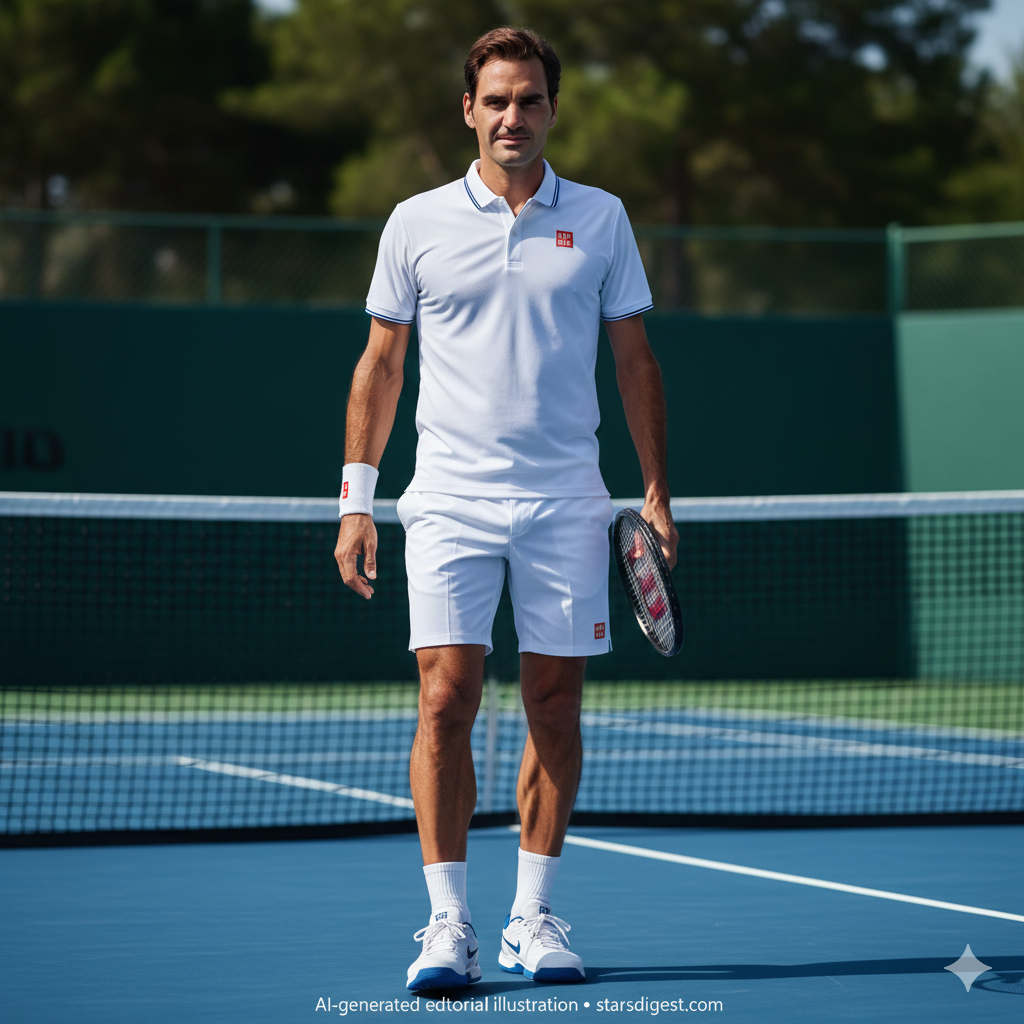
Name: Roger Federer
Caption: Swiss former professional tennis player and global sports icon
Birth Name: Roger Federer
Born: 8 August 1981
Birth Place: Basel, Switzerland
Nationality: Swiss
Other Names: FedEx (nickname), Maestro
Occupation: Former Professional Tennis Player, Entrepreneur, Sports Ambassador
Years Active: 1998 – 2022 (Professional Playing Career)
Height: 185 cm (6 ft 1 in approx)
Spouse / Partner: Mirka Federer (Married)
Children: Myla Federer, Charlene Federer, Leo Federer, Lenny Federer
Playing Style: Right-handed (one-handed backhand)
Net Worth: Approximately US $550 Million – $650 Million (2025–2026 estimate including business and endorsements)
Introduction
Roger Federer is widely regarded as one of the greatest tennis players in history and one of the most elegant and technically complete athletes ever to compete in professional sports. Known for his smooth movement, precise shot-making, and calm on-court demeanor, Federer built a career that combined dominance with artistry, earning admiration from fans, players, and analysts worldwide.
What made Federer unique was the beauty and efficiency of his game. While many players relied primarily on physical power or endurance, Federer’s tennis was built around timing, precision, and fluid movement. His matches often appeared effortless, even at the highest levels of competition.
His story represents longevity, adaptability, and sportsmanship. From a talented but emotional young player to one of the most respected champions in sports history, Federer’s journey reflects growth, discipline, and global cultural impact.
Early Life and Childhood
Roger Federer was born on August 8, 1981, in Basel, Switzerland. He grew up in a supportive family environment that encouraged sports and education. From a young age, Federer showed natural athletic ability across multiple sports, including football and tennis.
As a child, Federer was known for strong competitive energy but also emotional intensity. Early coaches worked to help him develop emotional control and mental focus, which later became one of his biggest strengths.
He quickly showed exceptional coordination, timing, and touch — qualities that later defined his playing style.
Junior Tennis Development and Early Promise
During his teenage years, Federer became one of the most promising young players in international junior tennis. His technical skill and natural shot variety made him stand out among other young players.
However, early in his development, he sometimes struggled with emotional consistency during matches. Over time, he worked intensely on mental discipline and match focus, transforming into one of the most composed competitors in professional tennis.
Professional Breakthrough — Entering the Global Stage
Federer entered professional tennis in the late 1990s and gradually built momentum. His early career included wins over top-ranked players, signaling that he had the potential to become one of the sport’s future leaders.
His first major championship victory marked the beginning of one of the most dominant tennis careers ever recorded. From that point forward, he became a central figure in global tennis.
Peak Dominance — The Federer Era
During the mid-2000s, Federer entered one of the most dominant periods in tennis history. He won multiple major championships across different surfaces and held the world number one ranking for extended periods.
His dominance was built around versatility. He could win on grass, hard courts, and compete at elite level on clay. His serve, forehand, net play, and movement allowed him to control matches tactically rather than relying only on power.
During this era, many players considered him nearly unbeatable on faster court surfaces.
Playing Style and Technical Identity
Federer’s playing style is often described as artistic tennis. His one-handed backhand became one of the most visually iconic shots in tennis history. His movement allowed him to reach shots early, giving him more time to control rallies.
His serve was highly efficient, often winning points quickly, while his net play reflected classic tennis style rarely seen in modern baseline-focused tennis.
Great Rivalries — Defining a Tennis Generation
Federer’s career included historic rivalries with other tennis legends. These rivalries defined one of the greatest competitive eras in tennis history and pushed Federer to continuously evolve physically and tactically.
Many of these matches are considered among the greatest matches ever played due to technical quality and emotional intensity.
Career Longevity and Late Career Evolution
Unlike many players who decline rapidly in their 30s, Federer adapted his playing style to maintain competitiveness. He shortened points, improved serve efficiency, and carefully managed tournament schedules to extend his career longevity.
His later career included emotional championship victories and historic comeback moments.
Retirement and Global Sports Ambassador Role
After retiring from professional tennis, Federer transitioned into global sports ambassador and business leadership roles. He continues contributing to tennis development and global sports philanthropy projects.
Business Ventures and Global Brand Influence
Federer built one of the most successful athlete brand portfolios in sports history. His partnerships focused on long-term brand identity, luxury brand collaborations, and sports development investments.
Personal Life and Personality
Federer is widely respected for humility, sportsmanship, and professionalism. He is known for strong family focus and balanced personal life despite global fame.
Awards and Achievements
Throughout his career, Federer won multiple Grand Slam championships, world rankings records, and global sports honors. He is widely considered one of the most decorated and respected tennis players in history.
Career Evolution Timeline
Roger Federer’s career evolved from talented Swiss junior player to global tennis champion, then to dominant world number one, and finally to legendary global sports ambassador.
Legacy and Historical Importance
Roger Federer helped redefine modern tennis through technical elegance, global popularity, and sportsmanship. He helped expand tennis global viewership and inspired a generation of players to focus on skill, creativity, and mental composure. His career is often studied as one of the most balanced combinations of athletic excellence and cultural influence in sports history.
Conclusion
Roger Federer’s story is one of elegance, discipline, and longevity. From a passionate young Swiss athlete to becoming one of the most admired champions in global sports history, his journey reflects dedication, adaptability, and respect for the game.
His legacy continues shaping tennis culture, athlete branding, and global sports professionalism standards. Roger Federer remains one of the most beloved and respected athletes in sports history.