

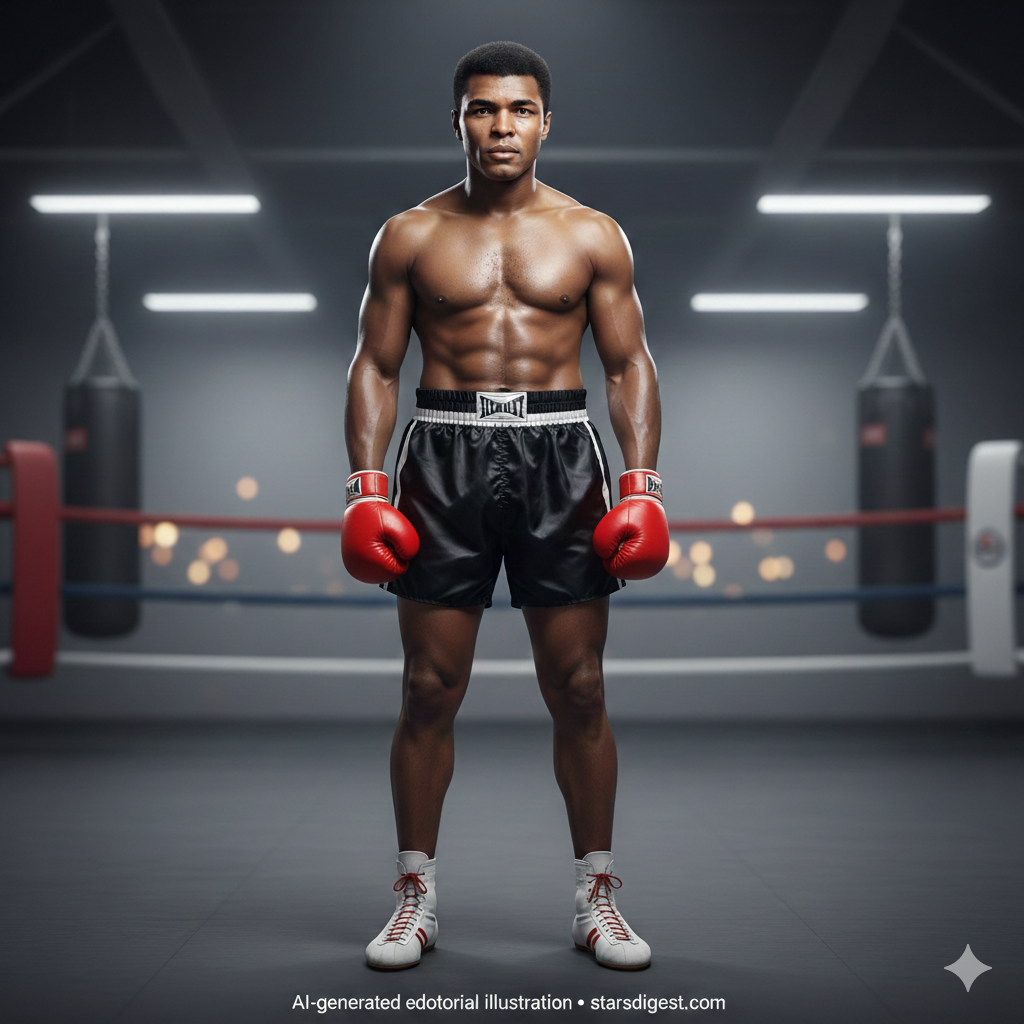
Basic Information
Name: Muhammad Ali
Caption: American professional boxer, civil rights activist, and global sports icon
Birth Name: Cassius Marcellus Clay Jr.
Born: 17 January 1942
Birth Place: Louisville, Kentucky, United States
Nationality: American
Other Names: The Greatest, The People’s Champion
Occupation: Professional Boxer, Activist, Public Speaker
Years Active: 1960 – 1981 (Professional Boxing Career)
Height: 191 cm (6 ft 3 in approx)
Spouse / Partner: Multiple marriages (Most well-known: Khalilah Ali, Veronica Porché Ali, Lonnie Ali)
Children: Multiple children including Laila Ali
Weight Class: Heavyweight
Net Worth: Estimated US $50 Million – $80 Million (modern estate value equivalent range)
Introduction
Muhammad Ali is widely regarded as one of the greatest athletes in history and one of the most culturally important sports figures of the 20th century. Known for his unmatched charisma, lightning-fast boxing speed, psychological mind games, and powerful social activism, Ali transformed boxing from a sport into global cultural theatre.
What made Muhammad Ali unique was that he was not just a champion inside the ring — he was a global voice outside of it. He spoke openly about race, religion, politics, and human rights at a time when many athletes avoided political topics. His life represents athletic excellence, personal courage, and the power of standing by personal beliefs even under extreme public pressure.
From a young boy learning boxing after a stolen bicycle incident to becoming a global icon of sports and social change, Ali’s story reflects confidence, resilience, and fearless individuality.
Early Life and Childhood
Muhammad Ali was born Cassius Marcellus Clay Jr. on January 17, 1942, in Louisville, Kentucky, during a period of racial segregation in the United States. His childhood environment exposed him early to racial inequality, which later influenced his activism and public voice.
His introduction to boxing happened unexpectedly. At age 12, after his bicycle was stolen, he told a police officer he wanted to “beat up” the thief. The officer, who was also a boxing coach, suggested he learn to fight properly. That moment changed sports history.
From early training sessions, coaches noticed his unusual speed, confidence, and natural rhythm. Unlike traditional heavyweight fighters who relied on power, Ali developed speed, footwork, and movement.
Olympic Gold and Early Professional Rise
Ali gained international attention when he won Olympic gold as a young amateur boxer. This victory made him a national sports hero and launched his professional boxing career.
Early in his professional career, he gained attention not only for his fighting ability but for his personality. He talked confidently, predicted victories, and entertained audiences with rhymes and bold statements — something rarely seen in boxing at the time.
Heavyweight Champion — Changing Boxing Forever
Ali shocked the world when he defeated the dominant heavyweight champion of his era. This victory changed global boxing expectations and marked the beginning of one of the most exciting eras in sports history.
His fighting style was revolutionary. Heavyweight boxers traditionally fought with slow power-based movement. Ali moved like a lightweight fighter — fast footwork, fast hands, and defensive head movement.
His famous phrase “Float like a butterfly, sting like a bee” perfectly described his fighting style.
Name Change and Religious Identity
During his rise to fame, Ali converted to Islam and changed his name from Cassius Clay to Muhammad Ali. This decision was highly controversial at the time but represented his strong commitment to personal identity and belief system.
He refused to be called by his birth name publicly, seeing it as connected to historical racial oppression.
Political Activism and Career Suspension
Ali made one of the most controversial decisions in sports history when he refused military draft service during wartime, citing religious beliefs and moral opposition.
As a result, he lost his boxing license and was banned from competing during his athletic prime years. Despite this, he refused to change his position, making him a global symbol of standing by personal beliefs.
Comeback Era and Historic Fights
After returning to boxing, Ali participated in some of the most famous fights in sports history. These fights combined physical endurance, psychological strategy, and global cultural significance.
His comeback victories helped cement his legacy not just as a great boxer but as one of the greatest comeback athletes in history.
Fighting Style and Boxing Intelligence
Ali’s boxing intelligence was as important as his physical skill. He studied opponents carefully and used psychological tactics to weaken their confidence before fights even started.
His defensive reflexes, speed, and endurance changed how heavyweights trained and fought.
Later Career and Health Challenges
In later life, Ali faced health challenges related to neurological disease. Despite physical decline, he remained one of the most beloved global sports figures, often appearing publicly as a symbol of strength and resilience.
Humanitarian Work and Global Peace Messaging
Ali later focused heavily on humanitarian work, global diplomacy visits, and peace advocacy. He became known worldwide as a symbol of courage, equality, and human dignity.
Awards and Achievements
Ali won multiple heavyweight championships and is widely considered one of the greatest boxers ever. Beyond sports, he received global humanitarian awards and lifetime achievement recognitions.
Career Evolution Timeline
Muhammad Ali’s life evolved from young amateur boxer to Olympic champion, then to global heavyweight champion, then to political activist and comeback champion, and finally to global humanitarian symbol.
Legacy and Historical Importance
Muhammad Ali changed sports culture forever. He proved athletes can influence global social conversations. He redefined boxing movement, athlete branding, and sports personality culture. His activism influenced athlete social responsibility movements across multiple sports generations.
Conclusion
Muhammad Ali’s story is one of courage, confidence, and global impact. From a young boy learning boxing in Louisville to becoming one of the most famous athletes in world history, his journey reflects strength of character and belief in personal truth.
His legacy continues influencing sports, civil rights discussions, and athlete activism worldwide. Muhammad Ali remains one of the most important and inspiring sports figures in global history.
