

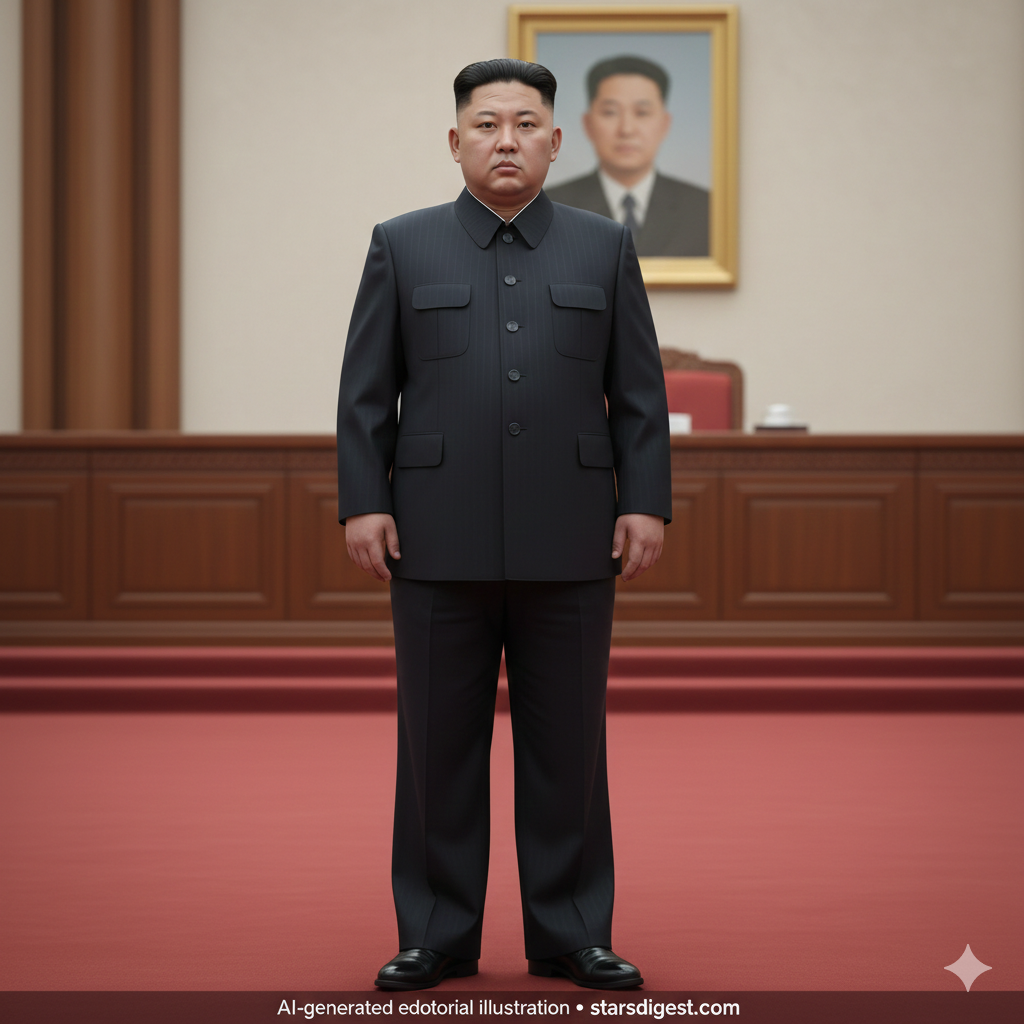
Basic Information
Name: Kim Jong Un
Caption: Supreme Leader of North Korea and Chairman of the Workers’ Party of Korea
Birth Name: Kim Jong Un
Born: Estimated 8 January 1982–1984 (Exact date not publicly confirmed)
Birth Place: Pyongyang, North Korea
Nationality: North Korean
Other Names: Marshal Kim Jong Un
Occupation: Political Leader, Military Commander
Years Active: 2011 – Present (Supreme Leadership Era)
Height: Approximately 170 cm (5 ft 7 in approx; estimates vary)
Spouse / Partner: Ri Sol-ju (Reported spouse)
Children: Reported to have children (Details largely private)
Political Role: Supreme Leader of North Korea
Net Worth: Not publicly verifiable (State-controlled system; estimates are speculative and vary widely)
Introduction
Kim Jong Un is one of the most globally discussed political leaders of the 21st century and the current leader of North Korea. Known for leading one of the world’s most isolated and tightly controlled political systems, Kim Jong Un became head of state following the death of his father, continuing a rare multigenerational political leadership structure.
What makes Kim Jong Un historically notable is his position as a third-generation leader in a single ruling family system — something extremely rare in modern global politics. His leadership period has been marked by nuclear weapons development, geopolitical tensions, and periods of diplomatic engagement with major world powers.
His story represents political legacy succession, centralized state power, and global geopolitical influence. From being a relatively unknown figure before leadership transition to becoming one of the most internationally recognized political leaders, his rise reflects unique political structure circumstances.
Early Life and Childhood
Kim Jong Un was born in Pyongyang, North Korea, into the country’s ruling political family. Much of his early life remains secretive due to the closed nature of North Korean government information.
It is widely believed he spent part of his education years outside North Korea, where he experienced foreign education systems. These experiences are often discussed in political analysis regarding his worldview and leadership style.
Growing up in the ruling family environment meant he was exposed early to political power structures and state leadership culture.
Family Political Legacy — Leadership Dynasty Background
Kim Jong Un is the son of North Korea’s previous leader and the grandson of the country’s founding leader. This created a rare modern political dynasty system where leadership remained within one family line across multiple generations.
This background heavily shaped expectations around leadership transition and political continuity.
Rise to Power — Leadership Transition Period
Kim Jong Un became North Korea’s leader following his father’s death in the early 2010s. His rise happened relatively quickly compared to typical political leadership development in other countries.
Early leadership years focused heavily on consolidating internal power, strengthening military loyalty, and establishing leadership authority domestically.
Leadership Style and Governance Approach
Kim Jong Un’s leadership style is widely described by global analysts as centralized and military-focused. His government emphasizes strong national defense capability and state-controlled economic and political structure.
North Korea under his leadership continues to operate under strict information control and centralized political authority.
Nuclear Weapons and Military Strategy Era
One of the defining aspects of Kim Jong Un’s leadership has been nuclear weapons program expansion. This has played a major role in global political discussions and international diplomatic tensions.
North Korea’s weapons testing programs have been central to global security policy debates during his leadership era.
Global Diplomacy — Rare International Engagements
Despite global tensions, Kim Jong Un has participated in rare high-level international diplomatic meetings with global leaders. These events were historically significant due to North Korea’s typically isolated international position.
These diplomatic moments represented unusual global political engagement for the country.
Domestic Policy and Economic Focus
During his leadership, North Korea has attempted controlled economic development in specific sectors while maintaining strict state control over national industries and political structure.
Public Image and State Media Representation
Within North Korea, Kim Jong Un is presented through state media as a strong national leader. Outside North Korea, global media coverage often focuses on geopolitical and security issues connected to his leadership.
Personal Life and Privacy
Very little verified information exists about his private life due to strong state privacy protection around leadership family members. Public appearances often emphasize state leadership rather than personal life narrative.
Historical Context and Global Influence
Kim Jong Un is considered one of the most geopolitically influential leaders of the modern era due to North Korea’s nuclear capability and strategic global position. His leadership continues to shape global security discussions.
Career Evolution Timeline
Kim Jong Un’s life evolved from secretive political family upbringing to heir-apparent leadership training, then to rapid leadership transition, and finally to established head of state and military commander.
Legacy and Historical Importance
Kim Jong Un’s long-term historical legacy is still developing. He is already considered one of the most significant geopolitical leaders of the early 21st century due to nuclear policy impact and global diplomacy events.
Conclusion
Kim Jong Un’s story is one of political inheritance, centralized leadership power, and global geopolitical significance. From growing up inside one of the world’s most secretive political systems to becoming one of the most recognized global leaders, his journey reflects unique historical and political circumstances.
His leadership continues shaping global political discussions, security strategy debates, and international diplomatic relationships. Kim Jong Un remains one of the most watched political figures in modern global history.