

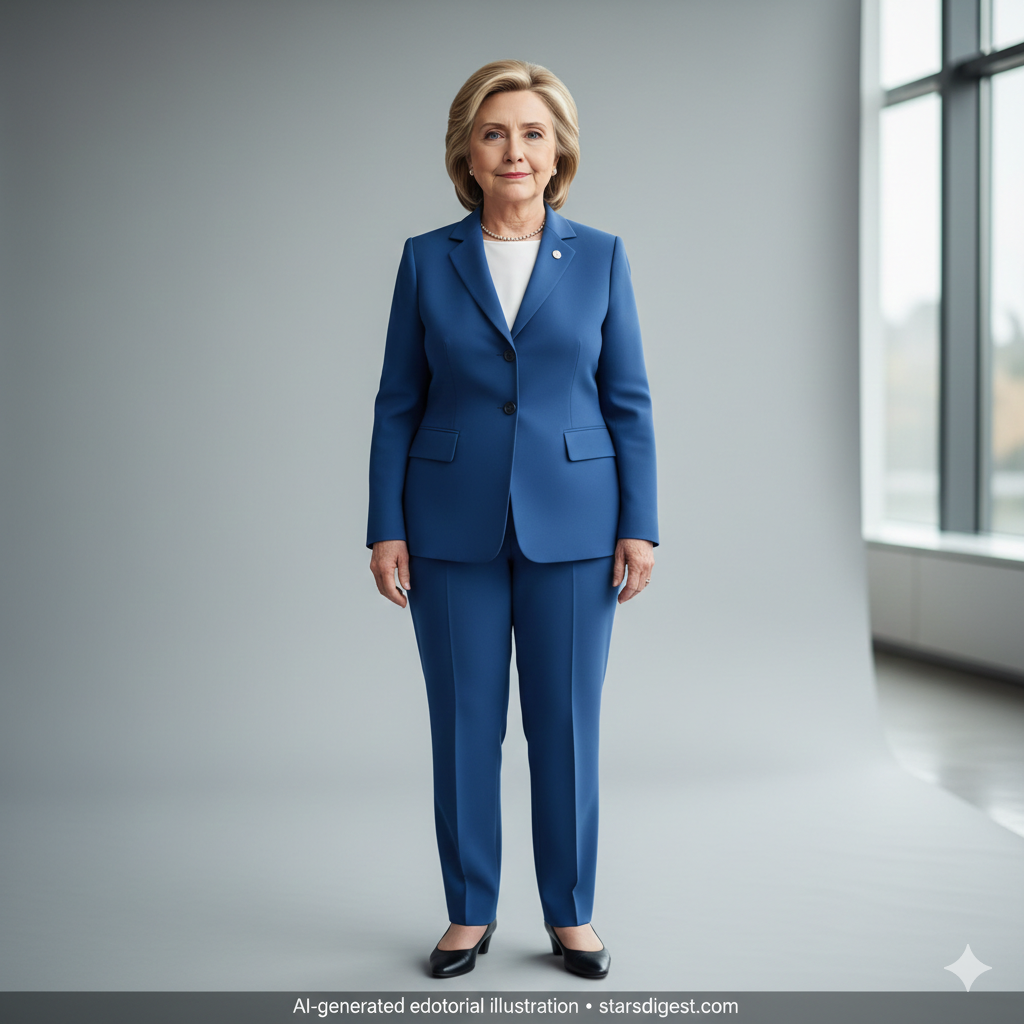
Basic Information
Name: Hillary Clinton
Caption: American politician, diplomat, lawyer, and former U.S. Secretary of State
Birth Name: Hillary Diane Rodham
Born: 26 October 1947
Birth Place: Chicago, Illinois, United States
Nationality: American
Other Names: Hillary Rodham Clinton
Occupation: Politician, Lawyer, Diplomat, Author, Public Speaker
Years Active: 1970s – Present
Height: 165 cm (5 ft 5 in approx)
Spouse / Partner: Bill Clinton (Married)
Children: Chelsea Clinton
Political Party: Democratic Party
Known For: U.S. Secretary of State, U.S. Senator, First Lady of the United States, Presidential Candidate
Net Worth: Approximately US $100 Million – $150 Million (combined family speaking, book, and investment estimates 2025–2026 range)
Introduction
Hillary Clinton is widely regarded as one of the most influential women in modern American political history and one of the most prominent global political figures of the late 20th and early 21st centuries. Known for her long career in public service, policy advocacy, and international diplomacy, Clinton built a political career spanning multiple historic roles in U.S. government.
What makes Hillary Clinton historically significant is the breadth of her public service. She served as First Lady of the United States, U.S. Senator, and U.S. Secretary of State, becoming one of the most experienced presidential candidates in modern American history. Her career reflects decades of involvement in domestic policy, global diplomacy, and public policy reform debates.
Her story is also closely tied to the evolving role of women in global political leadership, representing major shifts in gender representation in high-level government positions.
Early Life and Childhood
Hillary Diane Rodham was born on October 26, 1947, in Chicago, Illinois, and was raised in a middle-class suburban environment. Her father worked in the textile business, while her mother emphasized education, independence, and resilience.
From a young age, Clinton showed strong academic focus and leadership traits. She participated in school leadership programs and debate activities, demonstrating early interest in law, policy, and public service. Her childhood environment emphasized discipline, responsibility, and civic awareness.
During her teenage years, she became increasingly interested in social issues and public policy discussions, influenced by major political and social movements happening in the United States during the 1960s.
Education and Legal Career Foundation
Clinton attended university during a time of major social and political change in the United States. During her college years, she became deeply involved in political discussion, social reform issues, and legal advocacy interests.
She later attended law school, where she built a strong reputation for academic excellence and legal analysis ability. During her early legal career, she worked on issues related to children’s rights, education policy, and social justice legal advocacy.
Her early legal work helped establish her long-term focus on public policy reform and social program development.
Public Life Begins — National Political Entry
Clinton’s national public profile expanded during her years connected to major political leadership circles. During this period, she gained experience in policy development, legal advisory roles, and public policy planning.
Her policy work focused heavily on healthcare reform, education improvement, and family welfare programs. These policy interests later became major themes throughout her political career.
First Lady Era — Expanding the Role
During her time as First Lady of the United States, Clinton took on an unusually active policy role compared to previous First Ladies. She worked on healthcare reform initiatives and policy advisory efforts.
This period marked a shift in how First Ladies could participate in policy discussions and government strategy. While her policy involvement created political controversy at times, it also expanded expectations around First Lady leadership roles.
U.S. Senate Career — Independent Political Leadership
Clinton later successfully ran for U.S. Senate office, marking her transition into independent elected political leadership. During her Senate career, she worked on military support policy, national security issues, and domestic economic policy.
Her Senate years helped establish her as a major independent political figure rather than only being associated with earlier White House roles.
Secretary of State — Global Diplomatic Leadership
Clinton later served as U.S. Secretary of State, where she focused on global diplomacy, international alliances, and global conflict policy management. During this period, she traveled extensively and worked on global diplomatic initiatives.
Her tenure emphasized international coalition-building, diplomatic negotiation, and global strategic partnership development.
Presidential Campaigns and Historic Political Milestones
Clinton later ran for U.S. president, becoming one of the most prominent female presidential candidates in American history. Her campaigns represented historic moments in gender representation in major global political leadership races.
Her presidential campaign efforts focused on domestic economic policy, healthcare, foreign policy, and social equality programs.
Public Controversy and Political Debate
Like many major political figures, Clinton’s career has included periods of intense public debate and controversy. These controversies became part of broader political discussions and media coverage.
Despite political division around her career, her long-term influence on policy discussion and political representation remains historically significant.
Post-Government Career and Public Influence
After government service, Clinton remained active in global public speaking, writing, and policy discussion. She also participates in global foundation work and policy advocacy projects.
She continues influencing global political discussion through books, speeches, and public policy commentary.
Awards and Recognition
Clinton has received multiple global public service awards, honorary academic degrees, and international diplomatic recognition honors.
Career Evolution Timeline
Hillary Clinton’s career evolved from legal advocate to First Lady policy participant, then to independent elected official, then to global diplomatic leader, and finally to global political influence figure and policy voice.
Legacy and Historical Importance
Hillary Clinton helped reshape expectations around women in political leadership roles globally. She helped demonstrate that women can hold top diplomatic and national leadership roles traditionally dominated by men. Her career influenced public policy conversations around healthcare, education, and global diplomacy. She remains one of the most studied political careers in modern American history.
Conclusion
Hillary Clinton’s story is one of long-term public service, political resilience, and historic political influence. From legal advocacy work to global diplomacy leadership, her career reflects dedication to public policy and government service.
Her legacy continues influencing political leadership discussions, gender representation in government, and global diplomacy strategy. Hillary Clinton remains one of the most historically significant political figures of the modern era.