

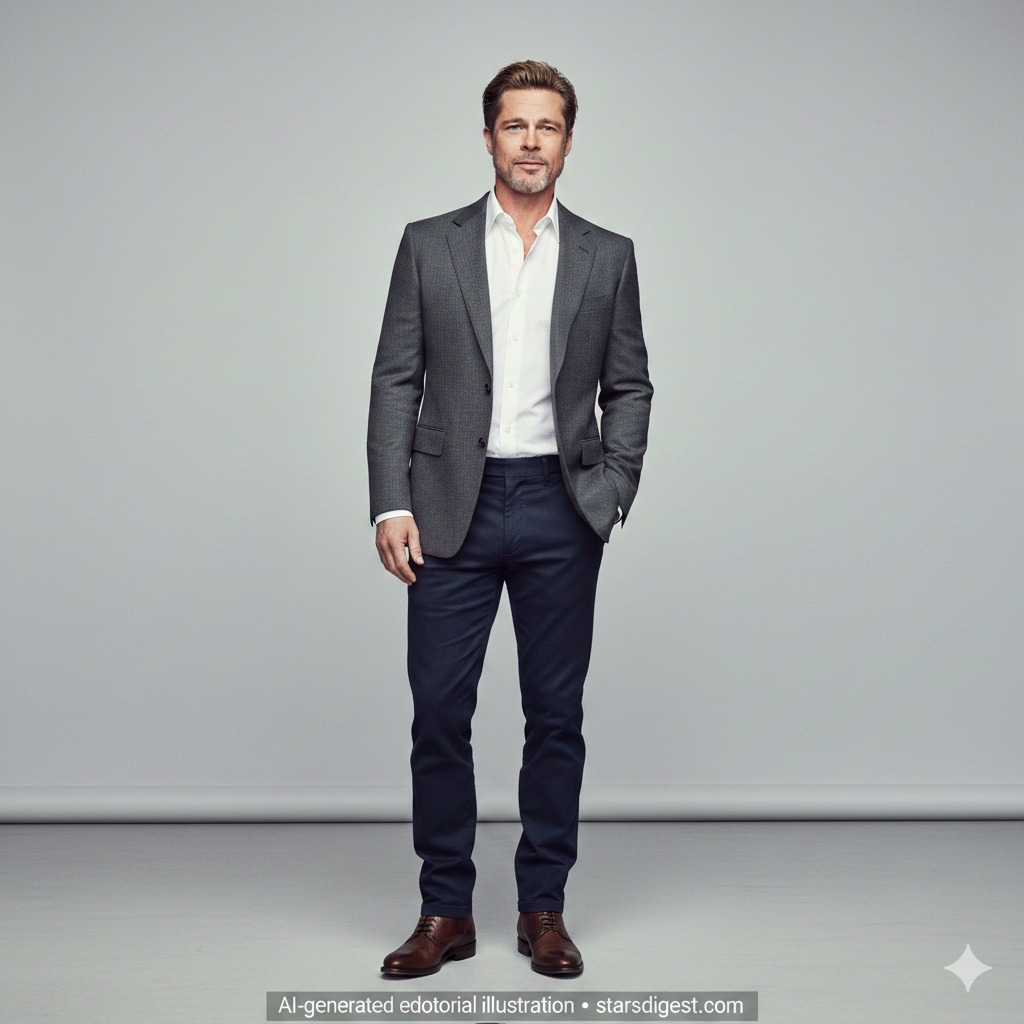
Basic Information
Name: Brad Pitt
Caption: American actor and film producer, Academy Award winner and Hollywood icon
Birth Name: William Bradley Pitt
Born: 18 December 1963 — Age: 62 (as of 2026)
Birth Place: Shawnee, Oklahoma, United States
Nationality: American
Occupation: Actor, Film Producer
Years Active: 1987 – Present
Height: Approx. 180 cm (5 ft 11 in approx)
Spouse / Partner:
- Jennifer Aniston (2000–2005)
- Angelina Jolie (2014–2019)
Children: Six children (including adopted and biological children with Angelina Jolie)
Position / Field: Film Acting, Film Production, Hollywood Entertainment
College / Education: University of Missouri (Journalism, Advertising — did not graduate)
Net Worth: Estimated US $400 Million – $450 Million (mid-2020s estimates)
Introduction
William Bradley Pitt, widely known as Brad Pitt, is one of the most influential and enduring actors in modern Hollywood history. Over a career spanning more than three decades, Pitt has evolved from a rising heartthrob actor into an Academy Award–winning performer, producer, and industry power figure. Known for balancing blockbuster appeal with serious dramatic credibility, Pitt has consistently demonstrated an ability to reinvent himself artistically while maintaining massive global popularity.
Beyond acting, Pitt has built a reputation as one of the most successful actor-producers of his generation. Through his production company, he has been directly involved in creating some of the most critically acclaimed films of the 21st century. His career trajectory represents a rare combination of commercial success, artistic risk-taking, and long-term strategic career management.
Early Life and Background
Brad Pitt was born on December 18, 1963, in Shawnee, Oklahoma, and raised in Springfield, Missouri. He grew up in a conservative, middle-class American household. His father owned a trucking company, while his mother worked as a school counselor. Pitt has often described his upbringing as structured, stable, and rooted in traditional Midwestern values.
During his school years, Pitt was heavily involved in extracurricular activities. He participated in sports such as golf, tennis, and swimming. He also joined debate teams and school clubs, demonstrating early confidence in public performance and communication.
Pitt attended the University of Missouri, majoring in journalism with a focus on advertising. Interestingly, his entry into acting came relatively late compared to many Hollywood stars. Just two weeks before graduation, he left college and moved to Los Angeles to pursue acting full-time. This decision marked a major turning point in his life and set him on a path toward global stardom.
Early Career Struggles and First Breakthroughs
Brad Pitt’s early years in Hollywood were filled with small roles, commercials, and television appearances. Like many actors, he worked odd jobs to support himself, including driving limousines and working in costume promotions.
His first major exposure came through television roles in the late 1980s and early 1990s. However, his true breakthrough moment arrived with a small but unforgettable role in a road drama film in 1991. Despite limited screen time, his performance gained significant public attention and quickly established him as a rising star.
Soon after, Pitt began landing leading roles in major studio films, showcasing both his screen presence and emotional acting ability.
Rise to Stardom in the 1990s
The 1990s were transformative for Pitt’s career. He moved beyond being perceived as just a good-looking leading man and began taking on psychologically complex roles.
During this decade, he starred in a variety of genres, including:
- Historical epics
- Psychological thrillers
- Crime dramas
- Romantic dramas
- Character-driven ensemble films
His performances during this era demonstrated emotional depth, vulnerability, and intensity. Critics began recognizing him as a serious actor capable of leading major dramatic projects.
One of his most culturally impactful roles came in a late-1990s psychological drama where he portrayed a rebellious and chaotic character. The role became iconic and remains one of the most discussed performances of his career.
Transition Into Mature Dramatic Roles (2000s)
Entering the 2000s, Pitt began shifting toward more mature and diverse roles. Instead of focusing solely on leading-man blockbuster parts, he pursued character-driven storytelling.
He appeared in major ensemble films that achieved both commercial success and critical acclaim. During this period, he worked with some of the world’s most respected directors, further strengthening his reputation as a serious actor.
He also began exploring roles that challenged traditional Hollywood masculinity—playing flawed, emotionally complex, or morally ambiguous characters.
Producer Career and Industry Influence
One of the most important aspects of Brad Pitt’s legacy is his success as a producer. Through his production company, he helped produce numerous award-winning films.
His production work often focuses on:
- Socially meaningful storytelling
- Historical dramas
- Character-driven independent cinema
- Unique directorial voices
- Risk-taking artistic projects
Several films he produced went on to win major international awards, demonstrating his strong creative instincts beyond acting.
His producing success elevated him from movie star status to industry architect—someone helping shape the types of films that get made.
Major Career Renaissance (2010s)
The 2010s marked another reinvention phase for Pitt. Instead of relying solely on past star power, he took on roles that required subtle emotional performance rather than physical transformation or action-driven storytelling.
He appeared in films that explored:
- Hollywood history
- War psychology
- Existential themes
- Aging masculinity
- Friendship and loyalty
His performance in a late-2010s Hollywood-set drama earned him major industry awards and critical recognition, reaffirming his acting credibility.
Acting Style and Performance Strengths
Brad Pitt’s acting style has evolved significantly over time. Early in his career, he relied heavily on charisma and screen presence. As he matured, his performances became more internally focused and emotionally layered.
His key acting strengths include:
Naturalistic Dialogue Delivery
He often delivers dialogue in a relaxed, realistic style rather than theatrical exaggeration.
Emotional Understatement
He excels at subtle emotional shifts rather than overt dramatic displays.
Character Immersion
He often blends completely into roles rather than playing variations of his own personality.
Genre Flexibility
He has successfully performed in action, drama, comedy, historical epics, and experimental cinema.
Public Image and Cultural Impact
Brad Pitt has remained one of the most recognizable celebrities in the world for decades. However, unlike many stars, his public image has shifted with age—from youthful icon to respected industry veteran.
He has also been known for humanitarian involvement, architecture interests, and global social initiatives. His public persona combines Hollywood glamour with intellectual curiosity and social awareness.
Personal Interests and Life Outside Acting
Outside acting and producing, Pitt has shown strong interest in architecture, design, and global housing projects. He has been involved in large-scale rebuilding efforts after natural disasters and has supported sustainable housing development initiatives.
He is also known for an interest in art collection and has collaborated with architects and designers on creative projects.
Industry Reputation
Brad Pitt is widely respected within Hollywood for:
- Strong script instincts
- Willingness to support new directors
- Long-term production investment vision
- Collaborative on-set behavior
- Professional discipline
Many younger actors and filmmakers cite him as an example of how to transition from star to industry leader.
Legacy and Long-Term Influence
Brad Pitt’s legacy is likely to be defined by three major pillars:
Actor Evolution
Successfully transitioning from heartthrob roles to serious dramatic performances.
Producer Power
Helping finance and create award-winning films that may not have existed otherwise.
Cultural Longevity
Maintaining global relevance across multiple decades of entertainment industry change.
Future Outlook
Even after decades in the industry, Pitt continues to explore new creative directions. Many industry analysts expect him to increasingly focus on producing, mentoring filmmakers, and selective high-impact acting roles.
His career trajectory suggests a move toward long-term creative leadership rather than high-volume acting output.
Conclusion
Brad Pitt represents one of the most complete Hollywood careers of the modern era. From small television appearances to global superstardom, from blockbuster films to award-winning productions, his career demonstrates adaptability, intelligence, and artistic curiosity.
He stands as a rare example of an actor who successfully balanced commercial success, artistic credibility, and business influence. As Hollywood continues evolving, Brad Pitt’s career will likely remain a case study in longevity, reinvention, and strategic creative growth.
Brad Pitt – Filmography and Career Credits
Feature Films (Major Career Works)
| Year | Title | Role | Notes |
|---|---|---|---|
| 1991 | Thelma & Louise | J.D. | Breakthrough role |
| 1992 | A River Runs Through It | Paul Maclean | Early leading role |
| 1994 | Interview with the Vampire | Louis de Pointe du Lac | Major commercial success |
| 1995 | Se7en | Detective David Mills | Cult classic crime thriller |
| 1995 | 12 Monkeys | Jeffrey Goines | Golden Globe winner |
| 1997 | The Devil’s Own | Rory Devaney | Political thriller |
| 1998 | Meet Joe Black | Joe Black / Death | Romantic fantasy drama |
| 1999 | Fight Club | Tyler Durden | Cultural phenomenon |
| 2000 | Snatch | Mickey O’Neil | Crime comedy cult hit |
| 2001 | Ocean’s Eleven | Rusty Ryan | Major blockbuster |
| 2004 | Troy | Achilles | Historical epic |
| 2005 | Mr. & Mrs. Smith | John Smith | Major box office success |
| 2007 | The Assassination of Jesse James | Jesse James | Critically acclaimed performance |
| 2008 | The Curious Case of Benjamin Button | Benjamin Button | Oscar nominated |
| 2009 | Inglourious Basterds | Lt. Aldo Raine | Tarantino war film |
| 2011 | Moneyball | Billy Beane | Oscar nominated performance |
| 2013 | World War Z | Gerry Lane | Major global blockbuster |
| 2014 | Fury | Don “Wardaddy” Collier | WWII drama |
| 2015 | The Big Short | Ben Rickert | Oscar-winning Best Picture (Producer) |
| 2019 | Once Upon a Time in Hollywood | Cliff Booth | Academy Award Winner |
| 2022 | Bullet Train | Ladybug | Action comedy hit |
| 2024 | Wolfs | Professional Fixer | Action thriller |
Television Appearances
| Year | Show | Role | Notes |
|---|---|---|---|
| 1987 | Another World | Chris | Early TV role |
| 1987 | Dallas | Randy | Guest appearance |
| 1989 | Growing Pains | Ben | Early recognition role |
| 2001 | Friends | Will Colbert | Emmy nominated guest role |
Producer Credits (Selected Major Projects)
| Year | Project | Role | Notes |
|---|---|---|---|
| 2006 | The Departed | Producer (Company involvement) | Oscar Best Picture |
| 2013 | 12 Years a Slave | Producer | Oscar Best Picture Winner |
| 2015 | The Big Short | Producer | Oscar Best Picture Winner |
| 2016 | Moonlight | Producer | Oscar Best Picture Winner |
| 2017 | War Machine | Producer | Netflix war satire |
| 2022 | Women Talking | Producer | Oscar Winning Project |
Voice Work
| Year | Project | Role |
|---|---|---|
| 2003 | Sinbad: Legend of the Seven Seas | Sinbad |
| 2010 | Megamind | Metro Man |
Awards Highlights
| Year | Award | Category | Project |
|---|---|---|---|
| 1996 | Golden Globe | Supporting Actor | 12 Monkeys |
| 2020 | Academy Award | Supporting Actor | Once Upon a Time in Hollywood |
| 2014 | Academy Award | Best Picture (Producer) | 12 Years a Slave |