

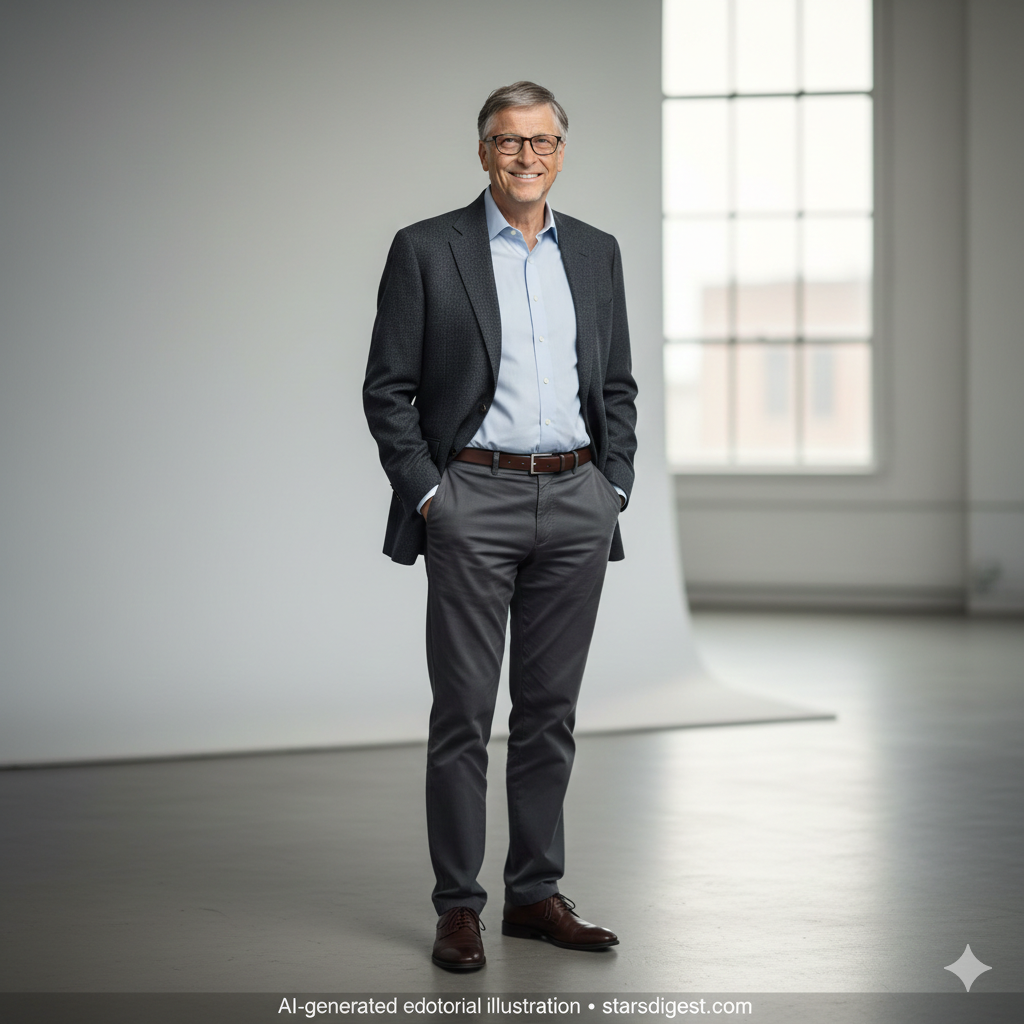
Basic Information
Name: Bill Gates
Caption: American business magnate, software pioneer, and global philanthropist
Birth Name: William Henry Gates III
Born: 28 October 1955
Birth Place: Seattle, Washington, United States
Nationality: American
Other Names: Bill
Occupation: Businessman, Software Developer, Philanthropist, Author
Years Active: 1975 – Present
Height: 177 cm (5 ft 10 in approx)
Spouse / Partner: Previously married to Melinda French Gates (Divorced)
Children: Jennifer Gates, Rory Gates, Phoebe Gates
Known For: Co-founding Microsoft, Personal Computer Software Revolution, Global Philanthropy
Net Worth: Approximately US $120 Billion – $140 Billion (varies by market and investments — 2025–2026 estimate range)
Introduction
Bill Gates is widely regarded as one of the most influential technology entrepreneurs in modern history and one of the key figures responsible for making personal computers a normal part of everyday life. As co-founder of Microsoft, Gates helped lead the software revolution that brought computing from specialized laboratories into homes, schools, and businesses around the world.
What makes Bill Gates historically unique is the scale of his impact across two different global eras. In his early career, he helped build one of the most powerful technology companies in history. Later in life, he shifted focus toward global philanthropy, becoming one of the largest charitable donors in modern history. His life represents both technological innovation and large-scale global humanitarian work.
His story reflects intellectual curiosity, competitive business strategy, long-term vision, and later, a major commitment to global health and education improvement.
Early Life and Childhood
William Henry Gates III was born on October 28, 1955, in Seattle, Washington, into a family that strongly valued education and professional achievement. His father was a prominent lawyer, and his mother was involved in business and community leadership. This environment encouraged intellectual ambition and competitive thinking from an early age.
As a child, Gates showed exceptional interest in reading and problem-solving. He was known for reading encyclopedias and advanced science materials beyond his grade level. His early intellectual curiosity focused on logic, mathematics, and strategic thinking.
One of the most important turning points in his childhood came when he gained access to computers during early school years — at a time when computers were extremely rare and mostly used by large organizations. This early access allowed him to develop programming skills years before most people even saw a computer.
Teen Programming Years — Discovering Software Power
As a teenager, Gates became deeply obsessed with programming. He spent long hours learning coding languages and experimenting with computer logic systems. Instead of viewing computers only as machines, he saw them as tools that could change how humans work, communicate, and solve problems.
During these years, he built early software programs and began developing entrepreneurial instincts. He started thinking about software not just as technology, but as a product people could use daily.
This period helped form his belief that software — not just hardware — would define the future of computing.
Harvard Years and the Decision That Changed Tech History
Gates later attended Harvard University, where he studied but continued focusing heavily on software development projects. During this time, personal computers were beginning to appear, and Gates recognized the opportunity before most of the world realized its importance.
He eventually made the bold decision to leave university early to focus fully on building a software company. This decision was risky but became one of the most important entrepreneurial moves in technology history.
Microsoft Era — The Personal Computer Revolution
Gates co-founded Microsoft during the early personal computing era. His vision was to place software at the center of computing growth. Instead of focusing only on hardware manufacturing, Microsoft focused on building operating systems and software platforms that other companies could use.
Microsoft’s operating system eventually became one of the most widely used software systems in history. This helped standardize personal computing and allowed businesses and individuals worldwide to adopt computers more easily.
Under Gates’ leadership, Microsoft became one of the most powerful technology companies in the world. During peak years, the company dominated global software markets and helped shape the entire modern digital economy.
Business Strategy and Leadership Style
Gates was known for intense focus, technical understanding, and competitive business strategy. He believed strongly in product development quality and long-term platform dominance rather than short-term profits.
His leadership helped Microsoft expand into office software, development tools, and enterprise computing systems, helping build the foundation of modern digital workplace productivity.
Transition From CEO to Global Philanthropy
Later in life, Gates gradually stepped away from daily corporate leadership and focused more on global philanthropy. This marked one of the largest career transitions ever made by a major business leader.
Through global foundation work, he focused on disease prevention, vaccine research, education access, and global poverty reduction. His philanthropic work has helped fund major global health initiatives and scientific research programs.
Global Health and Education Impact
Gates’ philanthropic efforts focus heavily on long-term global problem solving rather than short-term charity. His work has supported vaccine development, disease eradication programs, and global education improvement projects.
His foundation became one of the largest private charitable organizations in the world, influencing global health policy and research funding priorities.
Public Influence and Thought Leadership
Gates continues to influence global conversations around technology, climate change, public health, and future innovation. He frequently writes, speaks publicly, and supports scientific research discussions about future global challenges.
Personal Life and Personality
Gates is known for analytical thinking, curiosity about global problems, and interest in scientific innovation. Despite enormous wealth, he is often described as intellectually focused rather than lifestyle-driven.
He is also known for strong focus on family and long-term legacy planning through philanthropy.
Awards and Achievements
Throughout his career, Gates has received global technology innovation awards, humanitarian awards, and honorary academic recognitions. He is widely considered one of the most important technology entrepreneurs in history.
Career Evolution Timeline
Bill Gates’ career evolved from teenage programmer to technology entrepreneur, then to global corporate leader, and later to global philanthropist and public policy influence figure.
Legacy and Historical Importance
Bill Gates helped make personal computing accessible to the global population. His work helped shape the modern digital economy and software industry. His later philanthropy helped redefine how billionaires can influence global health and education systems. His life is often studied as one of the most influential combinations of business innovation and global humanitarian impact in modern history.
Conclusion
Bill Gates’ story is one of vision, strategy, and global responsibility. From writing software as a teenager to helping lead the global personal computer revolution and later becoming one of the world’s largest philanthropic donors, his journey reflects innovation combined with global impact.
His legacy continues shaping technology, global health, education systems, and future innovation strategy discussions. Bill Gates remains one of the most historically significant technology and humanitarian figures of the modern era.