

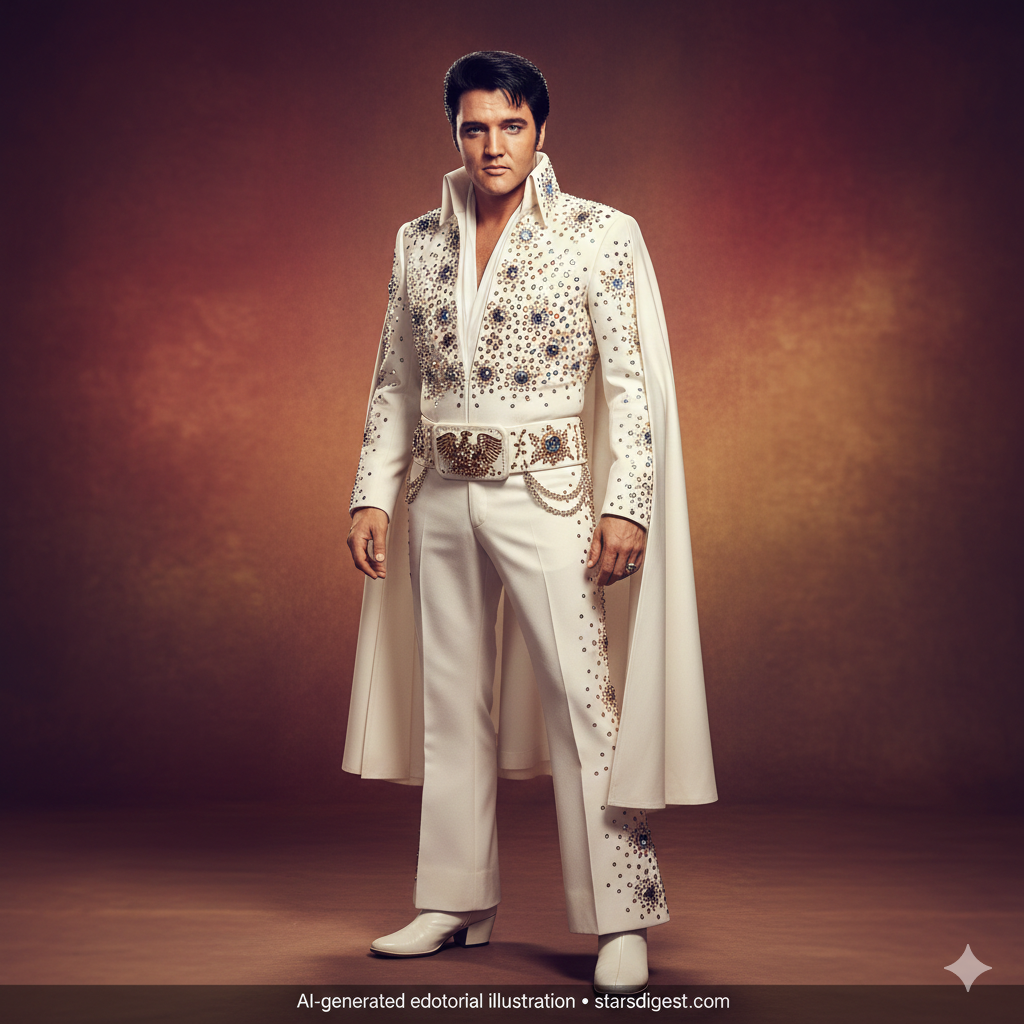
Basic Information
Name: Elvis Presley
Caption: American singer, actor, and global rock and roll pioneer
Birth Name: Elvis Aaron Presley
Born: 8 January 1935
Birth Place: Tupelo, Mississippi, United States
Nationality: American
Other Names: The King of Rock and Roll, The King
Occupation: Singer, Musician, Actor, Performer
Years Active: 1953 – 1977
Height: 182 cm (6 ft 0 in approx)
Spouse / Partner: Priscilla Presley (Married 1967 – 1973)
Children: Lisa Marie Presley
Genres: Rock and Roll, Rockabilly, Pop, Gospel, Country
Instruments: Vocals, Guitar, Piano
Net Worth: Estimated modern estate value equivalent US $300 Million – $400 Million+ (brand and catalog legacy value)
Introduction
Elvis Presley is widely regarded as one of the most influential musicians in modern music history and one of the most recognizable cultural icons of the 20th century. Known for his revolutionary stage presence, distinctive voice, and genre-blending musical style, Elvis helped transform rock and roll from a niche youth sound into a global cultural movement.
What made Elvis historically unique was his ability to bridge musical styles across cultural and racial boundaries at a time when music scenes were often separated. His music blended rhythm and blues, country, gospel, and early rock — helping create the foundation of modern popular music.
His story represents cultural change, global fame, and artistic revolution. From growing up in poverty in the American South to becoming one of the most famous entertainers in history, his journey reflects talent, timing, and cultural transformation.
Early Life and Childhood
Elvis Presley was born on January 8, 1935, in Tupelo, Mississippi, into a working-class family. His early life included financial hardship and limited resources. Music, particularly gospel music from church services, played a major role in his childhood.
As a child, Elvis was quiet but deeply interested in music. He listened to gospel, blues, and country radio stations, absorbing multiple musical styles. This exposure later shaped his genre-blending music identity.
His family later moved to Memphis, Tennessee — a city that played a major role in shaping American music history. Memphis exposed Elvis to blues, soul, and early rhythm and blues music.
Early Music Career — Birth of Rock and Roll Star
Elvis began recording music in the early 1950s. His early recordings shocked the music industry because they blended Black rhythm and blues musical style with country influences — something rarely done in mainstream white radio music at the time.
His early live performances also became famous for high energy, dance movement, and emotional intensity — very different from traditional singers of the era.
Breakthrough — National Fame Explosion
Elvis’ early singles became massive hits across the United States. His music and stage performance created intense fan reactions, especially among young audiences.
His performance style changed how male pop performers moved on stage. He helped introduce dance and physical expression into mainstream male pop performance.
Global Superstardom — Cultural Revolution Era
By the late 1950s and early 1960s, Elvis became one of the most famous people in the world. He helped make rock and roll a global youth culture phenomenon.
His influence expanded beyond music into fashion, hairstyle trends, and youth identity culture.
Film Career — Hollywood Music Star Era
Elvis also built a major film career, appearing in multiple films that combined music performance and storytelling. These films helped expand his global audience and solidified his entertainment superstar status.
Music Style and Vocal Identity
Elvis’ music combined emotional gospel vocal tone with blues rhythm and country storytelling. His vocal style helped shape early rock and roll singing technique.
Later Career — Live Performance Comeback Era
Later in his career, Elvis returned to live performance concerts, which became some of the most famous live shows in music history. His later performances showed strong emotional stage presence and mature vocal power.
Cultural Impact and Global Influence
Elvis helped change how pop stars were marketed globally. He helped build the modern global pop star model combining music, film, and personal branding.
Personal Life and Public Image
Elvis was known for charisma, generosity, and strong connection with fans. However, his life also included struggles with fame pressure and health challenges later in life.
Awards and Achievements
Elvis Presley received multiple music awards and was later inducted into multiple music halls of fame. He is widely considered one of the best-selling music artists of all time.
Career Evolution Timeline
Elvis Presley’s life evolved from poor Mississippi childhood to early rock recording pioneer, then to global music superstar, then to film entertainment icon, and finally to global music legend status.
Legacy and Historical Importance
Elvis Presley helped create modern global pop star culture. He helped make rock and roll mainstream worldwide. His influence shaped pop performance, music marketing, and youth culture identity for decades.
Conclusion
Elvis Presley’s story is one of cultural revolution and global influence. From poverty in the American South to becoming one of the most famous entertainers in history, his journey reflects talent and cultural timing.
His legacy continues shaping modern pop music, performance culture, and global celebrity identity. Elvis Presley remains one of the most important and influential musicians in modern history.