

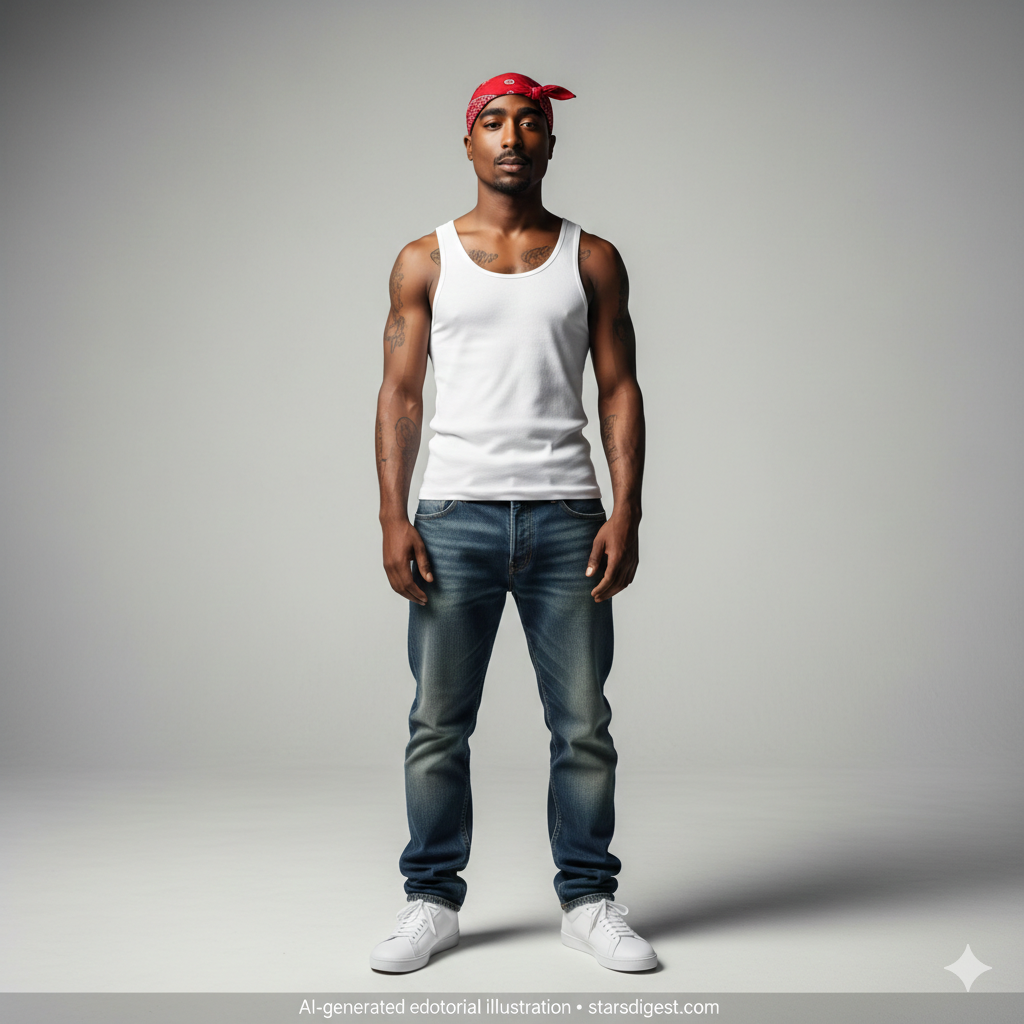
Basic Information
Name: Tupac Shakur
Caption: American rapper, actor, poet, and cultural icon
Birth Name: Lesane Parish Crooks (later renamed Tupac Amaru Shakur)
Born: 16 June 1971
Birth Place: New York City, New York, United States
Nationality: American
Other Names: 2Pac, Makaveli (later music era alias)
Occupation: Rapper, Songwriter, Actor, Poet, Activist
Years Active: 1989 – 1996
Height: 176 cm (5 ft 9 in approx)
Spouse / Partner: Briefly married to Keisha Morris (Annulled)
Children: None
Genres: Hip-Hop, West Coast Hip-Hop, Conscious Rap, Gangsta Rap
Net Worth: Estimated US $40 Million – $60 Million (modern estate valuation equivalent range)
Introduction
Tupac Shakur is widely regarded as one of the most influential rappers in music history and one of the most culturally important voices in hip-hop. Known for combining raw street storytelling with deep emotional and political commentary, Tupac helped transform rap music into a platform for social reflection, personal vulnerability, and cultural storytelling.
What made Tupac unique was his emotional intensity and lyrical honesty. He could write aggressive street anthems while also writing deeply sensitive songs about poverty, family struggle, racism, and social injustice. His work reflected both the pain and hope of urban American life in the 1990s.
His story represents artistic brilliance, controversy, cultural power, and tragedy. From growing up around political activism to becoming one of the most famous rappers in history, Tupac’s life reflects creativity, struggle, and legacy beyond music.
Early Life and Childhood
Tupac Shakur was born on June 16, 1971, in New York City into a family deeply connected to political activism. His mother was involved in Black liberation political movements, which exposed him early to discussions about race, social justice, and political resistance.
His childhood included frequent moving between cities and financial struggle. Despite instability, Tupac showed strong artistic talent early. He wrote poetry, studied acting, and showed strong interest in storytelling and performance.
During his teenage years, he attended performing arts school, where he studied acting, ballet, poetry, and theatre. This artistic training later influenced his music style, which often felt theatrical and emotionally expressive.
Early Music Career — Entry Into Hip-Hop
Tupac began his music career as a backup dancer and supporting performer before becoming a lead rapper. His early music already showed strong political awareness and storytelling depth.
Unlike many early rappers focused only on street credibility, Tupac combined political themes with personal emotional storytelling.
Breakthrough — Voice of a Generation
Tupac’s early albums introduced him as a rapper willing to talk openly about social inequality, police violence, poverty, and youth struggles. His music quickly connected with young listeners who felt their real-life struggles were being represented.
He became one of the most emotionally expressive voices in hip-hop, balancing aggressive rap delivery with vulnerable storytelling.
Rise to Global Hip-Hop Superstardom
During his peak years, Tupac became one of the most recognizable rap artists in the world. His music combined street storytelling, political commentary, and emotional vulnerability.
He released multiple successful albums that became culturally defining hip-hop records of the 1990s era.
Acting Career and Media Presence
Beyond music, Tupac built a serious acting career, appearing in films that showcased his dramatic acting ability. Many critics believed he had strong long-term acting potential beyond music.
Musical Style and Artistic Identity
Tupac’s music blended aggressive rap delivery with poetic emotional writing. His lyrics often focused on survival, social injustice, family loyalty, and emotional pain.
His ability to switch between political rap, party music, and emotional storytelling made him one of the most versatile rappers of his era.
Controversy and Public Conflict Era
Tupac’s career included legal issues, public conflicts, and intense media attention. His life reflected the pressure of rapid global fame combined with real-life street conflict environments.
His rivalry era became one of the most talked-about periods in hip-hop history.
Cultural Influence and Social Voice
Tupac became a symbol of youth frustration, cultural identity, and social resistance. Many listeners viewed him not just as a rapper but as a cultural voice speaking for marginalized communities.
Tragic Death and Global Shock
Tupac died in 1996 after a shooting incident, shocking the global music world. His death happened at the peak of his cultural influence, which contributed to his legendary status.
Posthumous Success and Estate Growth
After his death, multiple albums were released using unreleased recordings. His music continued influencing new generations of hip-hop artists and listeners.
Awards and Achievements
Tupac received multiple music awards and posthumous cultural recognition honors. He is widely considered one of the greatest rappers in history.
Career Evolution Timeline
Tupac’s life evolved from activist family childhood to performing arts student, then to rising political hip-hop voice, then to global rap superstar and cultural icon.
Legacy and Historical Importance
Tupac helped redefine hip-hop as emotional storytelling and political expression. He influenced rap lyric writing, social commentary music, and artist authenticity culture. His work continues influencing hip-hop artists, social activists, and music storytelling globally.
Conclusion
Tupac Shakur’s story is one of talent, truth, and cultural impact. From artistic teenager to one of the most influential rappers in history, his journey reflects creative brilliance and social awareness.
His legacy continues shaping global hip-hop culture, social commentary music, and artist storytelling authenticity. Tupac remains one of the most important voices in music history.