

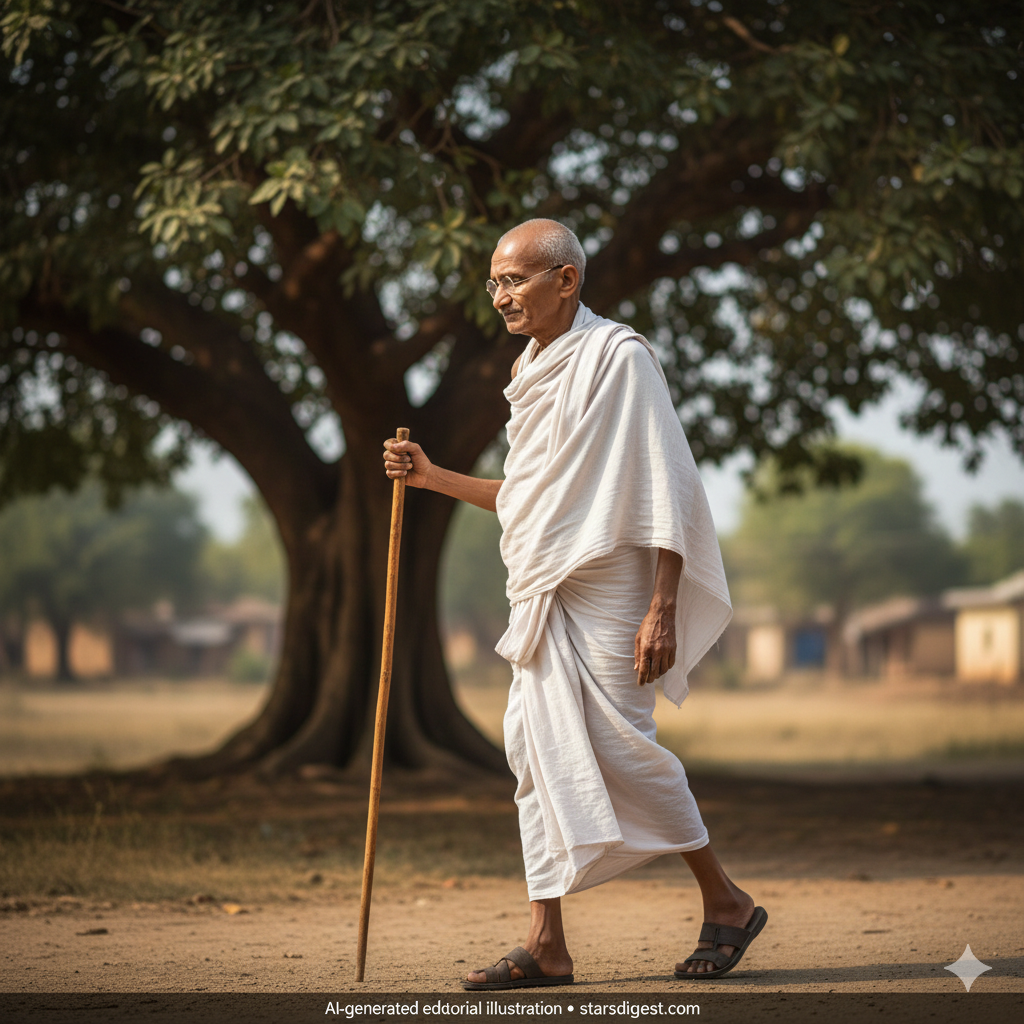
Basic Information
Name: Mahatma Gandhi
Caption: Indian independence leader, political activist, and global symbol of nonviolent resistance
Birth Name: Mohandas Karamchand Gandhi
Born: 2 October 1869
Birth Place: Porbandar, Gujarat, India
Nationality: Indian
Other Names: Bapu, Father of the Nation (India honorific)
Occupation: Lawyer, Political Leader, Freedom Activist, Philosopher
Years Active: 1893 – 1948 (Public Activism Era)
Height: Approximately 165 cm (5 ft 5 in approx historical estimate)
Spouse / Partner: Kasturba Gandhi (Married)
Children: Harilal Gandhi, Manilal Gandhi, Ramdas Gandhi, Devdas Gandhi
Known For: Nonviolent Resistance (Satyagraha), Indian Independence Movement
Net Worth: Not applicable (Lived simple lifestyle; rejected personal wealth accumulation)
Introduction
Mahatma Gandhi is widely regarded as one of the most influential political and moral leaders in world history and one of the most important figures in the global fight for civil rights and freedom through nonviolent resistance. Gandhi led India’s independence movement against British colonial rule using peaceful protest, civil disobedience, and moral persuasion rather than armed conflict.
What makes Gandhi historically unique is that he transformed political resistance into a moral philosophy. His belief in ahimsa (nonviolence) and satyagraha (truth-force or moral resistance) influenced not only India’s freedom struggle but also global civil rights movements. Leaders across the world later used his methods to challenge injustice.
His story represents discipline, sacrifice, and moral leadership. From a shy young law student to becoming one of the most recognized freedom leaders in history, Gandhi’s life reflects the power of peaceful resistance.
Early Life and Childhood
Mohandas Karamchand Gandhi was born on October 2, 1869, in Porbandar, a coastal town in Gujarat, India. He was born into a family involved in local governance and public service. His father served as a chief minister in local administration, while his mother deeply influenced his spiritual and ethical values.
From childhood, Gandhi was exposed to religious teachings focused on truth, discipline, and compassion. His mother’s spiritual influence played a major role in shaping his lifelong moral thinking.
As a child, Gandhi was shy and quiet but deeply observant. He was not known for academic brilliance but showed strong discipline and honesty. These early personality traits later became defining characteristics of his leadership style.
Education and Move to England
Gandhi later traveled to England to study law. During this period, he was exposed to Western political thought, philosophy, and global cultural ideas. However, he also struggled with identity and cultural adaptation.
During his time abroad, he began studying religious texts from multiple faiths, including Hinduism, Christianity, and Islam. This exposure helped shape his belief in universal spiritual truth and tolerance.
South Africa — The Turning Point
One of the most important phases of Gandhi’s life happened in South Africa. While working as a lawyer, he experienced racial discrimination firsthand. These experiences transformed him from a lawyer into a political activist.
In South Africa, he began developing the philosophy of nonviolent civil resistance. He organized peaceful protests against discriminatory laws and encouraged communities to resist injustice without violence.
This period shaped his lifelong belief that moral strength can defeat political oppression.
Return to India — Leadership of Independence Movement
After returning to India, Gandhi became a central leader in the independence movement. Instead of supporting violent rebellion, he encouraged mass peaceful protests, boycotts, and civil disobedience campaigns.
He encouraged Indians to reject British goods and support local production, especially hand-spun cloth. His simple clothing and lifestyle symbolized unity with ordinary Indian citizens.
Philosophy of Nonviolence and Civil Disobedience
Gandhi believed true strength comes from moral courage rather than physical force. His philosophy of satyagraha encouraged people to resist unjust laws peacefully, even if it meant accepting arrest or punishment.
His approach transformed political protest globally by showing that peaceful resistance can defeat powerful political systems.
Salt March — Symbol of Mass Resistance
One of Gandhi’s most famous protests was the Salt March. He led thousands of people on a long walk to protest British salt taxes. This protest became a powerful global symbol of peaceful resistance and mass civil disobedience.
Global Influence and Civil Rights Legacy
Gandhi’s philosophy later influenced major global leaders, including civil rights and human rights movements worldwide. His methods proved that peaceful protest can create long-term political change.
Personal Lifestyle and Simplicity
Gandhi chose to live extremely simply. He wore handmade clothes, ate simple food, and avoided luxury. He believed leaders should live like the people they represent.
Challenges and Criticism
Like many major historical leaders, Gandhi faced criticism and political opposition during his lifetime. However, his global influence as a symbol of nonviolent resistance remains historically significant.
Assassination and National Mourning
In 1948, Gandhi was assassinated. His death shocked India and the world. Millions mourned his loss, and he became a permanent global symbol of peace and moral resistance.
Awards and Recognition (Historical Legacy)
Gandhi is globally recognized as one of the greatest nonviolent leaders in history. He is honored worldwide as a symbol of peace, civil rights, and moral leadership.
Career Evolution Timeline
Gandhi’s life evolved from shy student to lawyer, then to civil rights activist in South Africa, then to leader of India’s independence movement, and finally to global symbol of peaceful resistance.
Legacy and Historical Importance
Mahatma Gandhi helped prove that peaceful protest can defeat political oppression. His philosophy influenced global civil rights movements, anti-colonial struggles, and modern protest movements. His life is studied globally in political science, ethics, leadership, and peace studies.
Conclusion
Mahatma Gandhi’s story is one of discipline, sacrifice, and moral leadership. From a quiet child in Gujarat to becoming one of the most important freedom leaders in world history, his journey reflects the power of truth, courage, and nonviolence.
His legacy continues influencing global civil rights movements, peace activism, and leadership philosophy. Mahatma Gandhi remains one of the most respected moral leaders in world history.