
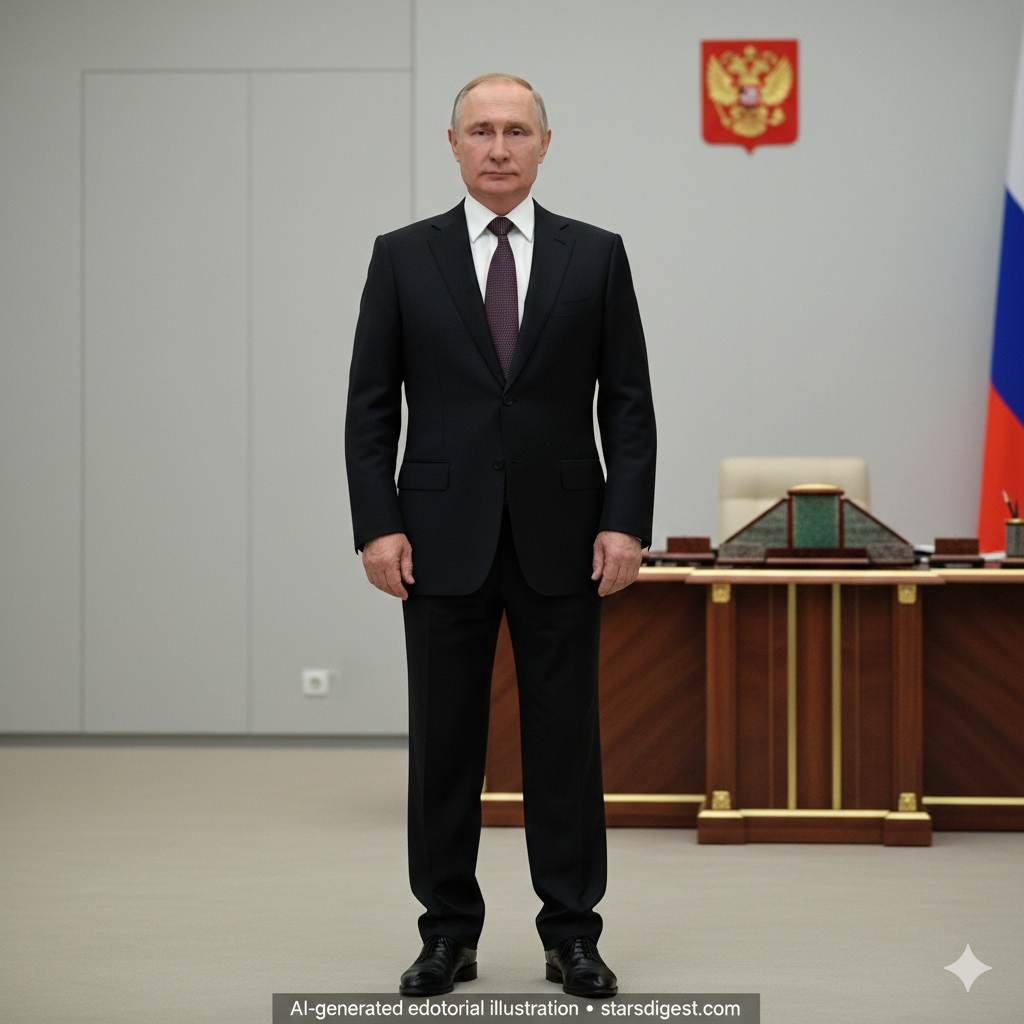
Basic Information
Name: Vladimir Putin
Caption: Russian political leader and long-serving President of Russia
Birth Name: Vladimir Vladimirovich Putin
Born: 7 October 1952
Birth Place: Leningrad (now Saint Petersburg), Russia (Former Soviet Union at birth)
Nationality: Russian
Other Names: VVP (informal abbreviation)
Occupation: Politician, Former Intelligence Officer
Years Active: 1990s – Present (Political Career Era)
Height: 170 cm (5 ft 7 in approx)
Spouse / Partner: Previously married to Lyudmila Putina (Divorced)
Children: Two daughters (reported: Maria and Katerina)
Political Role: President of Russia (multiple terms), Former Prime Minister of Russia
Net Worth: Highly disputed — public official disclosures vs external estimates vary widely
Introduction
Vladimir Putin is one of the most influential and controversial political figures of the 21st century and one of the longest-serving leaders in modern Russian history. Known for his strong central leadership style, focus on restoring Russian state power, and major role in global geopolitical developments, Putin has shaped Russia’s domestic and foreign policy direction for over two decades.
What makes Putin historically significant is the scale of his influence over post-Soviet Russia. He rose during a period of economic instability and political transition and positioned himself as a leader focused on state stability, national strength, and centralized authority. His leadership era has been defined by major global geopolitical tensions, economic reforms, military policy decisions, and global diplomacy conflicts.
His story reflects the transformation of Russia from post-Soviet transition into a centralized modern state with strong executive leadership.
Early Life and Childhood
Vladimir Putin was born on October 7, 1952, in Leningrad, which is now called Saint Petersburg. He grew up in a working-class Soviet family environment during the Cold War era. His childhood took place in a Soviet society shaped by post-World War II rebuilding and strong state ideology.
From a young age, Putin showed interest in discipline-based activities, including martial arts training. He practiced judo and later earned high-level ranking, which became part of his lifelong identity emphasizing discipline and control.
During school years, he was described as academically capable and highly focused, especially in subjects related to history and language.
Education and Early Intelligence Career
Putin studied law at university, where he focused on international law and state governance structure. After graduation, he joined Soviet state intelligence services.
During his intelligence career, he worked in foreign intelligence operations during the later years of the Cold War. This period shaped his views on global politics, state security, and international power balance.
His intelligence background later became one of the defining elements of his political leadership style.
Entry Into Politics — Post-Soviet Russia
After the collapse of the Soviet Union, Russia entered a period of economic crisis, political restructuring, and major institutional change. Putin transitioned into government administration roles, working within regional and federal political structures.
During this time, he built a reputation as a disciplined and loyal state official. His administrative skills and security background helped him rise quickly through government ranks.
Rise to National Leadership
Putin eventually became Prime Minister and later President of Russia during a period when Russia was seeking political stability and economic recovery. His early presidency focused on restoring state authority, stabilizing national economic systems, and strengthening central government control.
During this early leadership phase, Russia experienced economic growth influenced partly by global energy markets and domestic economic restructuring policies.
Presidential Era — Centralized State Leadership
Putin’s leadership era has focused heavily on centralized state authority, national security focus, and global geopolitical influence. Domestically, his leadership style has emphasized strong executive control, national unity messaging, and state-managed economic structure in key sectors.
Internationally, his presidency has been associated with major geopolitical conflicts, diplomatic tensions, and strategic military decisions that significantly shaped global political relations.
Global Geopolitical Influence
Putin became one of the most influential figures in global geopolitics during the early 21st century. Russia’s role in global conflicts, energy markets, cyber security discussions, and international diplomacy has often been closely associated with his leadership strategy.
His global political role is often analyzed through security strategy, regional power influence, and global multipolar power structure discussions.
Leadership Style and Political Identity
Putin is often described as a leader who emphasizes state strength, national sovereignty, and centralized political authority. His leadership approach often focuses on long-term state power strategy rather than short-term political cycles.
Supporters often credit him with restoring Russia’s global power influence and internal stability after post-Soviet economic collapse periods. Critics often focus on concerns related to political freedom, media control, and opposition restrictions.
Public Image and Cultural Messaging
Putin’s public image often emphasizes strength, discipline, and national pride. He is frequently portrayed participating in sports, military symbolism events, and national ceremonies.
Personal Life and Privacy
Putin is known for maintaining a highly private personal life compared to many global leaders. Public information about his family life is limited, reflecting his preference for separating personal and political life.
Awards and Recognition
Putin has received state honors and international political recognition awards from various countries and organizations, while also being subject to international political criticism and sanctions discussions depending on geopolitical context.
Career Evolution Timeline
Vladimir Putin’s career evolved from Soviet intelligence officer to regional political administrator, then to national government leadership, and finally to one of the longest-serving major global political leaders of the modern era.
Legacy and Historical Importance
Vladimir Putin’s leadership period is considered one of the defining eras of post-Soviet Russian history. His role reshaped Russia’s domestic political structure, global military positioning, and geopolitical strategy. His legacy is heavily debated globally, reflecting different political, cultural, and international perspectives. Regardless of viewpoint, his influence on modern global politics is historically significant.
Conclusion
Vladimir Putin’s story is one of political rise during national transition and long-term global leadership influence. From growing up in Soviet-era Russia to becoming one of the most powerful political leaders of the 21st century, his journey reflects state power strategy, political discipline, and global geopolitical influence.
His legacy continues shaping global political strategy discussions, international diplomacy, and modern Russian state identity. Vladimir Putin remains one of the most influential and debated political figures in modern world history.